
Speaking up for dairy
Rise and shine took on new meaning for three AMPI dairy farmer-owners on Sept. 18 and 19. They set their alarm clocks extra early to board a flight bound for Washington, D.C., and the AMPI Fly-In on Capitol Hill. Then they spent 48 hours working to shine a light on key dairy issues.
“I was up at 3 a.m. to catch the shuttle to the Minneapolis airport,” said Donald Honadel, a member of the AMPI Board of Directors from Augusta, Wis. He was joined by fellow early risers Jon Schmidt of Owatonna, Minn., and Aaron Maassen of Maurice, Iowa, who also serve on the board, and Sarah Schmidt, AMPI vice president of marketing.
AMPI representatives made the trek to D.C. to put faces and voices to discussions about dairy policy issues. Co-op members define message priorities in resolutions adopted during the annual meeting and through conversations with industry leaders.
“It’s never easy to leave farm and family, but it’s important to show elected
officials how the issues we talk about affect us.”
-
WORKING WASHINGTON
It was the first time visiting the nation’s capital for Schmidt and Maassen. Honadel was there 35 years ago for a 4-H conference. All were newcomers in advocating for AMPI and dairy with senators and representatives.
From the time their early-morning flight touched down at Reagan Washington National Airport, they hustled to locations across Capitol Hill to get quality face time with their representatives. In all, the group participated in 13 meetings over two days. These included visits with legislators, an AMPI Political Action Committee (PAC)-sponsored breakfast event, agriculture committee staff meetings and other networking opportunities.
“Every meeting was a little different, but we seemed to get all our discussion points across during all the meetings we had,” Jon Schmidt said. “They like to hear what the farmer has to say.”
Honadel, who serves on the AMPI PAC committee with Schmidt, agreed.
“It’s never easy to leave farm and family, but it’s important to show elected officials how the issues we talk about affect us,” he said. “It also helps humanize things by putting a face on these officials’ constituents.”
PROMOTING WHOLE MILK
Honadel is the father of fifth-grader Jenna and kindergartner John. He tapped into his children’s school lunch experiences when discussing the Whole Milk for Healthy Kids Act.
“They don’t like the taste of the skim milk offered at school,” he said while urging a “yes” vote for bill passage from Rep. Derrick Van Orden and Sen. Tammy Baldwin of Wisconsin. (The bill, which has been passed by the Senate at the time of publication, would allow whole and reduced-fat milk to again be served through the School Meals Program.)
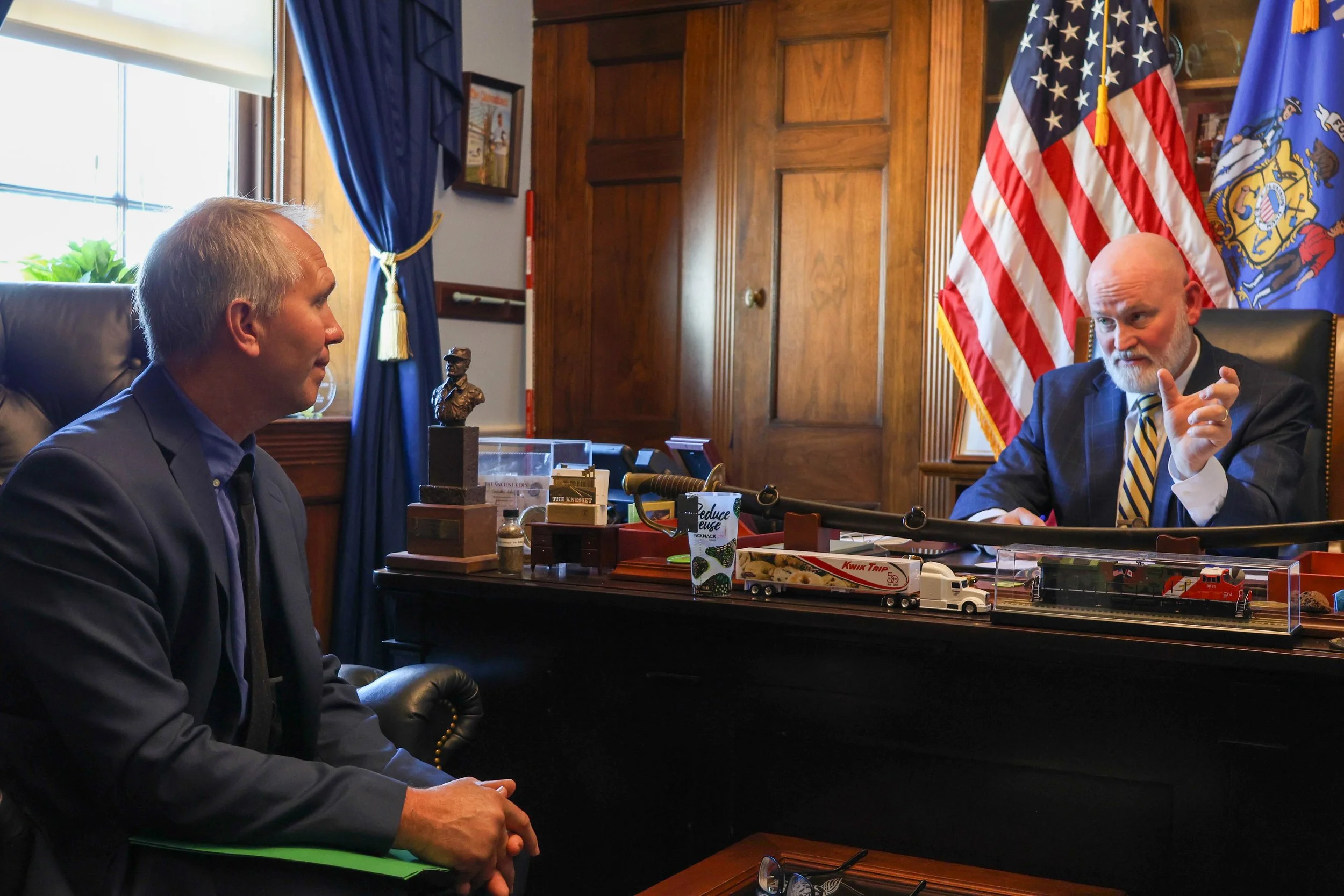
Between travel and meetings, board member Donald Honadel, left, spent nearly 18 hours representing fellow AMPI members on the first day of this year’s fly-In.
The AMPI member, who farms alongside family at the 400-cow Bears Grass Dairy, also promoted a federal crackdown on mislabeled imitation dairy products, as outlined in the Dairy PRIDE Act. He said Sen. Chuck Grassley planned to act on information from the AMPI delegation. The group raised concerns about lax enforcement of regulations requiring products labeled as milk, yogurt, ice cream and cheese to come from dairy animals.
Talking trade
Reducing trade barriers for U.S. dairy and other agricultural exports was a key talking point for Schmidt. The fifth-generation dairy farmer, who milks about 200 cows at Schmity Holsteins, focused on trade talk while meeting with staff members for Sen. Amy Klobuchar and Rep. Angie Craig of Minnesota. Klobuchar is the ranking Democrat on the Senate Ag Committee, while Craig occupies the same position on the House committee.
Trade was also a primary topic when Schmidt visited with Brad Finstad, representative for Minnesota’s 1st Congressional District, and legislative aides for Sen. Tina Smith.
“We need to maintain and expand stable trade relationships,” Schmidt said, reminding that more than 18% of U.S. dairy production is exported. “We need to keep in good standing with our current trading partners, like Mexico. They play a huge role in the dairy industry export market.”
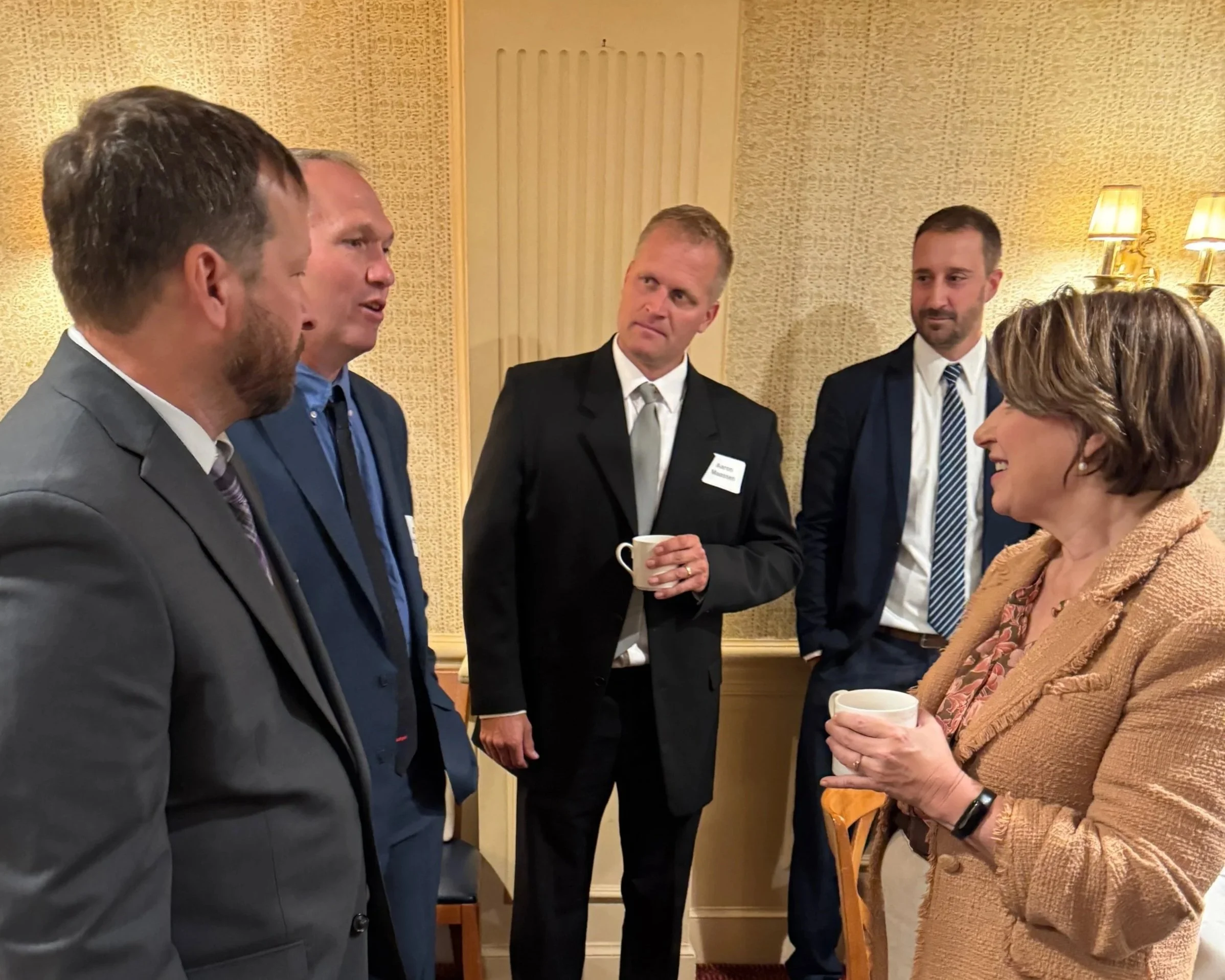
The AMPI PAC sponsored a fundraising breakfast for Sen. Amy Klobuchar, the ranking Democrat on the Senate Agriculture Committee. PAC committee member and Minnesotan Jon Schmidt says the event was good exposure for AMPI and the dairy industry, noting that the senator is “a big supporter of dairy.” She is currently sponsoring bipartisan legislation like the Whole Milk for Healthy Kids Act, Dairy Nutrition Incentive Program Act and the Dairy PRIDE Act. Pictured in this photo are AMPI board members Jon Schmidt, Owatonna, Minn.; Donald Honadel, Augusta, Wis.; Aaron Maassen, Maurice, Iowa; and Cory Schmidt, AMPI director of strategic sourcing and risk management.
Advocating for workers
Maassen finished chopping 34,000 tons of silage just a few hours before temporarily trading his work boots for dress shoes. The homegrown feed is for the 2,000-cow herd at Maassen Dairy, which he operates with his father and two brothers. But they don’t do it alone, he stressed.
Like many dairy operators, the Maassens employ foreign-born workers to help carry the load. This real-world fact and the federal obstacles surrounding it were topics the dairy farmer discussed while visiting with Sen. Grassley and the legislative aides of Rep. Randy Feenstra and Sen. Joni Ernst, all of Iowa.
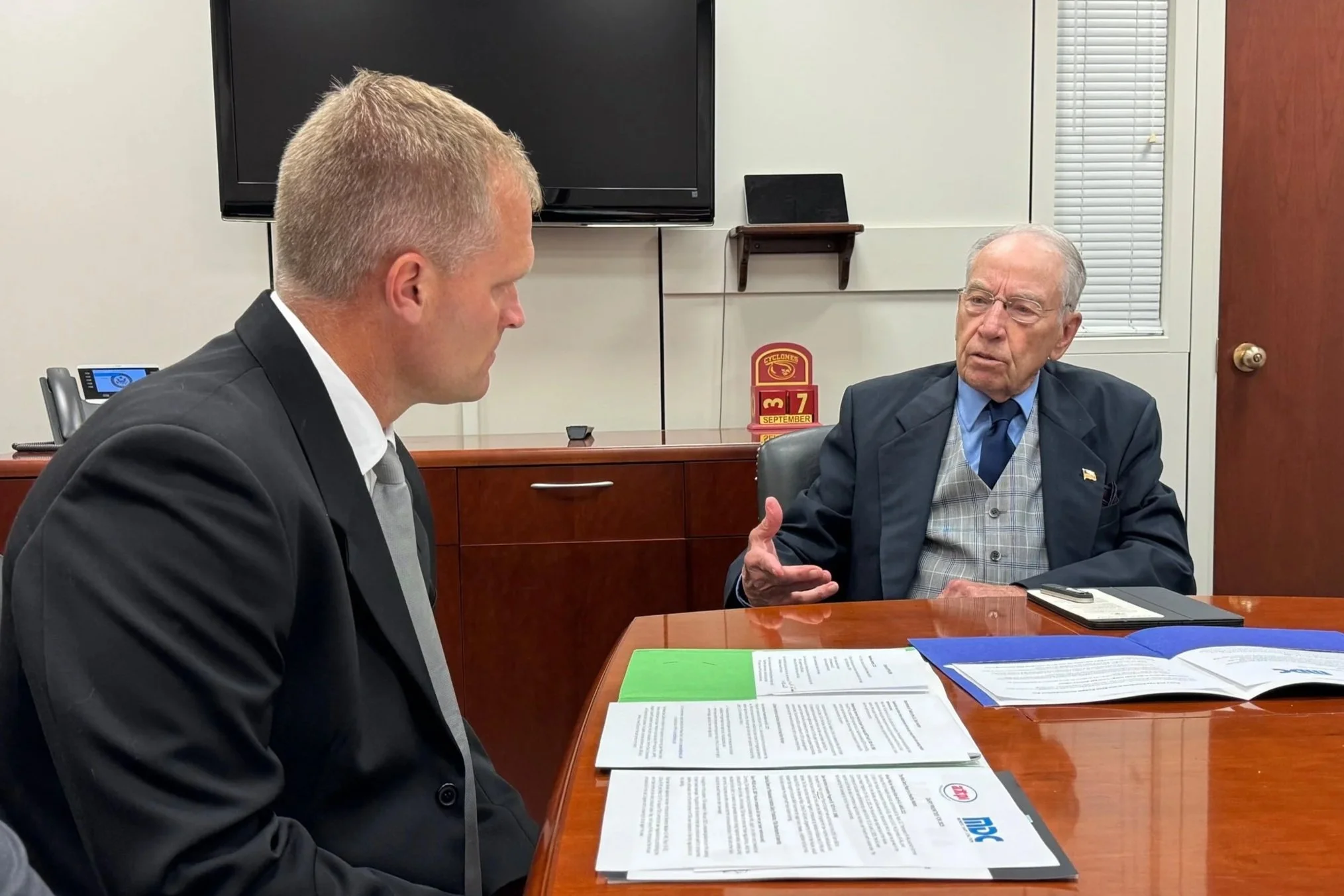
AMPI dairy farmer-owner Aaron Maassen of Maurice, Iowa, says talking with 92-year-old U.S. Sen. Chuck Grassley of Iowa, the oldest sitting U.S. senator and the longest-serving Republican in congressional history, is like having a conversation with his grandfather. “I know he relates to farmers,” Maassen said. “He has such depth of wisdom and a humble attitude.”
Maassen calls the current immigration system “a failure to well-meaning immigrants” whom many dairy farmers rely on to assist with farm operations. The current agricultural worker visa is seasonal and does not provide the year-round option that dairies require, he added. Threats of deportation are also causing unrest for immigrant workers.
“I care for my employees and their families, and their ability to live and work without fear or an unknown future for their families, friends and community,” Maassen told Grassley.
Seeing and hearing
Summing up the fly-in experience, the trio agreed their investment of time and resources was worth it. They felt heard by policymakers.
“They want us to come out there and tell them what we need or want done,” Schmidt said. “Because if they don’t hear from us, they don’t know what’s really going on.”
Maassen walked away from the experience with a similar take. “They do listen,” he said. “If we say nothing, they hear nothing. We need to be a voice for our industry.”